
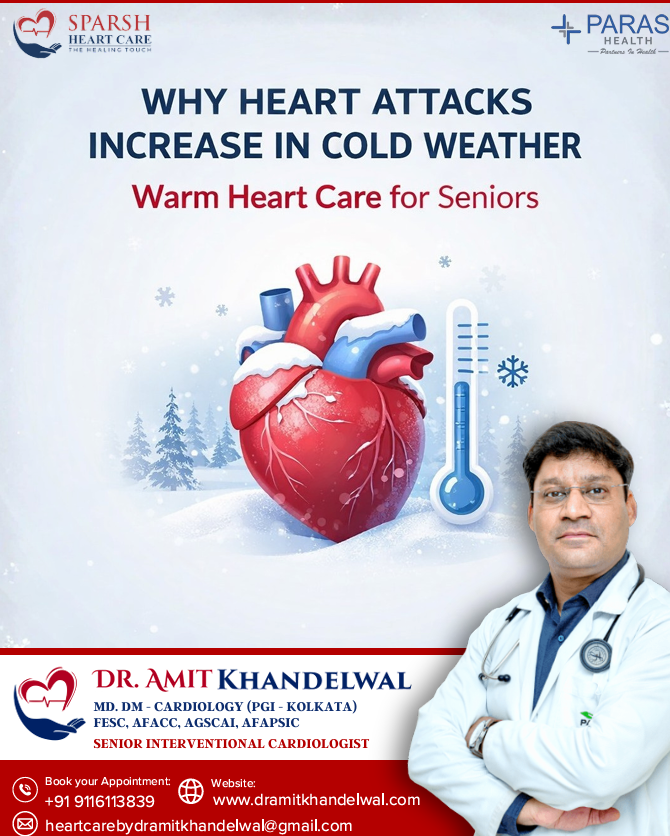
Winter poses unique challenges for heart health. Cold temperatures increase cardiovascular risks, especially heart attacks. Early prevention and awareness can save lives.
Physiological Impact of Cold
Cold air causes blood vessels to constrict, raising blood pressure. The heart works harder to pump blood, increasing the risk of clot formation.
- Blood vessels constrict in cold temperatures
- Increased blood pressure puts strain on the heart
- Higher risk of dangerous blood clots
Lifestyle Factors in Winter
Winter brings lifestyle changes that can negatively impact heart health:
- Reduced physical activity due to cold weather
- Higher intake of comfort foods rich in fat and salt
- Seasonal stress and depression can indirectly affect heart health
Vulnerable Populations
Certain groups face higher risks during cold weather:
- Elderly individuals are more susceptible to cold-related heart complications
- Patients with pre-existing heart disease face significantly higher risks
- Smokers and diabetics are particularly vulnerable
Warning Signs to Watch
Recognizing heart attack symptoms early can save lives. Watch for these warning signs:
- Chest pain or discomfort
- Shortness of breath
- Dizziness, fatigue, or sudden sweating
If you experience any of these symptoms, seek immediate medical attention. Time is critical in heart attacks.
Preventive Measures
Taking proactive steps can significantly reduce your risk:
- Dress warmly to reduce strain on the heart
- Maintain regular exercise indoors during extreme cold
- Eat a balanced diet with heart-friendly foods
- Avoid sudden exertion in cold weather (e.g., shoveling snow)
Medical Advice
Regular medical care is essential for heart health, especially during winter months:
- Schedule regular check-ups with a cardiologist
- Monitor blood pressure and cholesterol levels
- Follow prescribed medications diligently
Emergency Response
In case of a heart attack, quick action is critical:
- Recognize symptoms early
- Call emergency services immediately — every minute counts
- Keep emergency contacts handy
- Stay calm and avoid exertion
Expert Perspective
“Your heart needs extra care in winter. Early prevention saves lives.”
— Dr. Amit Khandelwal
Senior Interventional Cardiologist
PGI Kolkata | FESC | AFACC | AGSCAI | AFAPSIC
Conclusion
Winter heart care is about vigilance and lifestyle adjustments. Awareness campaigns can reduce seasonal spikes in heart attacks. Remember, early prevention is the best defense against cold weather-related heart complications.
Stay warm, stay active, and prioritize your heart health this winter season.
Need a Heart Health Consultation?
Schedule an appointment with Dr. Amit Khandelwal for comprehensive cardiac care and personalized treatment.